

Introduction to HSN/SAC Codes
In the GST system, every product and service has its own specific code. Many businesses still wonder what is HSN code and SAC code and why they are important in GST billing. These codes help governments to understand what type of goods or services businesses are selling and what tax rate should apply. This is where HSN and SAC codes become important for businesses while creating invoices and filing GST returns.
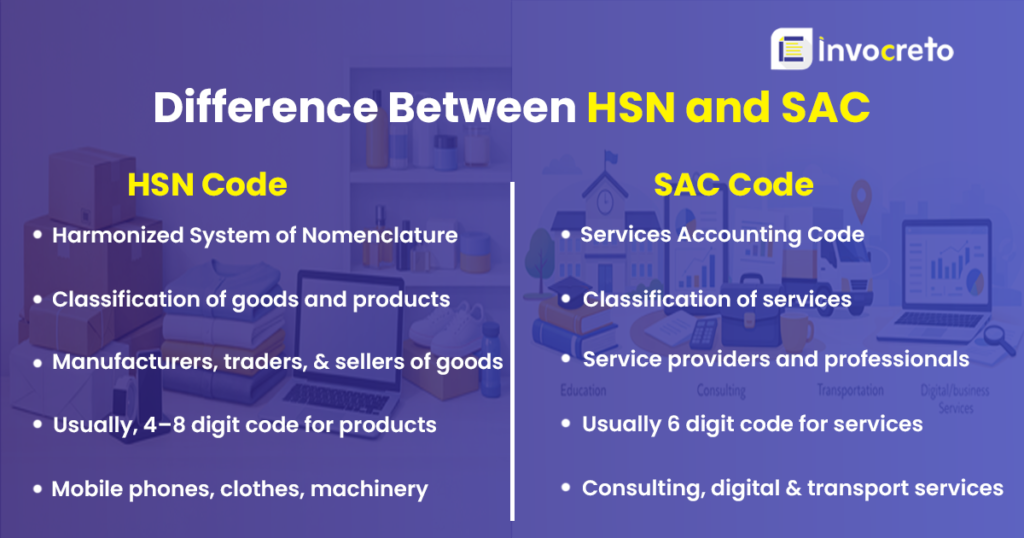
HSN (Harmonized System of Nomenclature) codes are used for classifying goods. Electronics, clothing, food items, or machinery, every product comes in a particular HSN code. This helps to maintain a uniform system for identifying products and applying the correct GST rate.
On the other side, SAC (Services Accounting Code) is used for services. Businesses who provides services like consulting, digital marketing, transportation, or legal services should use SAC codes. These codes help clearly identify which services businesses are offering.
Using the correct HSN or SAC code is very important for GST billing and tax compliance.
The correct GST rate is applied when the right code is used, and it ensures GST returns are filed accurately. Wrong or incorrect codes can create mismatches in GST filings. That’s why businesses must understand HSN and SAC codes and use them carefully in their invoicing process.
Why Correct HSN/SAC Codes Matter
Choosing the correct HSN or SAC code is very important for every business registered under GST. These codes help to identify the exact type of product or service you are selling.
GST billing becomes accurate, and businesses can avoid unnecessary tax issues or notices when the correct code is used.
Impact on GST Rates
Each product or service in GST is linked with a specific tax rate through its HSN or SAC code. If a business selects the wrong code, the GST rate will also be applied incorrectly on the invoice.
Example:
If a product that should be taxed at 12% and you mistakenly applied the wrong code and classified it under a 18% GST rate, it’s charged the wrong tax amount. This can create problems during GST return verification.
Importance in GST Returns and Invoices
HSN and SAC codes must be mentioned in GST invoices and returns. These codes help the GST system clearly identify the goods or services being sold.
Using the correct code helps in:
- Accurate GST return filing
- Proper invoice documentation
- Avoiding mismatches in GST records
Role in Tax Compliance
Correct HSN and SAC codes help to businesses stay compliant with GST rules. When codes are used properly, it reduces the chances of errors, audits, or notices from the GST department. Correct classification ensures that tax rates, invoices, and GST filings remain accurate, which helps businesses maintain smooth tax compliance.
Common Mistakes Businesses Make While Choosing HSN/SAC Codes
Many businesses make small mistakes while selecting HSN codes, but these errors can create bigger issues during GST return filing or departmental checks. Most of these mistakes happen because businesses do not verify the correct classification of their products before generating invoices.
One of the common mistakes is using outdated or wrong HSN & SAC codes. GST classifications can change or be updated, but some businesses continue using old codes in their billing system. This may result in applying the wrong GST rate or creating mismatches in GST returns.
Another issue is choosing very generic HSN codes instead of specific ones. Every product usually has a detailed classification, but businesses sometimes select a broader category because it seems easier. However, using a generic code can lead to incorrect tax rates.
Example:
If a business sells mobile accessories, selecting a general electronics HSN code instead of the exact product classification may create GST calculation errors.
Some businesses also copy HSN codes from competitors or suppliers without verification. This looks convenient process, but sometimes it happens with the wrong specification of incorrect code.
Lastly, sometimes businesses make wrong classifications between goods and services, or select a completely unrelated category. These types of mistakes can lead to incorrect GST filings or get notices from the GST department.
To avoid such issues, businesses should always verify the correct HSN or SAC code before creating invoices or filing GST returns.
How Wrong HSN Codes Lead to GST Department Notices
Mismatch in GST Returns: Wrong HSN codes can create mismatches between invoice details and GST returns like GSTR-1.
Incorrect GST Rate: Selecting the wrong HSN code may lead to applying an incorrect GST rate on invoices.
Issues During GST Audits: During audits, incorrect product classification through HSN codes may raise compliance questions.
GST Department Notices: Continuous mismatches or wrong tax reporting due to incorrect HSN codes can lead to GST department notices.
Real Examples of HSN/SAC Mistakes
| Example | Details |
| Product Sold | Mobile phone accessories |
| Mistake Made | Used a general electronics HSN code instead of the correct product classification |
| What Happened | The invoice applied an incorrect GST rate |
| Impact on GST Filing | GST return data did not match the expected classification |
| Result | The business had to correct the HSN code and update GST details in filings |
How to Choose the Correct HSN/SAC Code
1. Use a Reliable HSN/SAC Code Search Tool
Instead of guessing the code, businesses can use a dedicated search tool to find the correct classification. Tools like the Invocreto HSN Code Search Tool allow you to search codes based on your product or service name quickly.
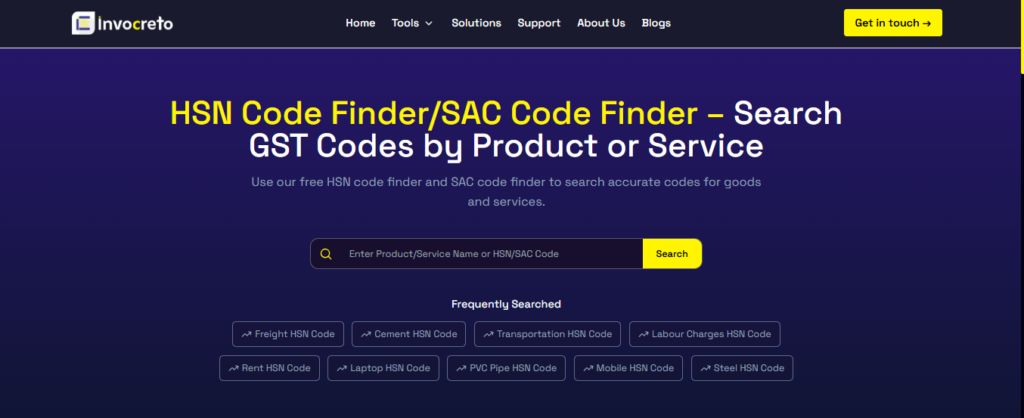
These tools help businesses to:
- Find accurate HSN or SAC codes
- View product descriptions and categories
- Reduce errors in GST invoices and returns
2. Search by Product or Service Name
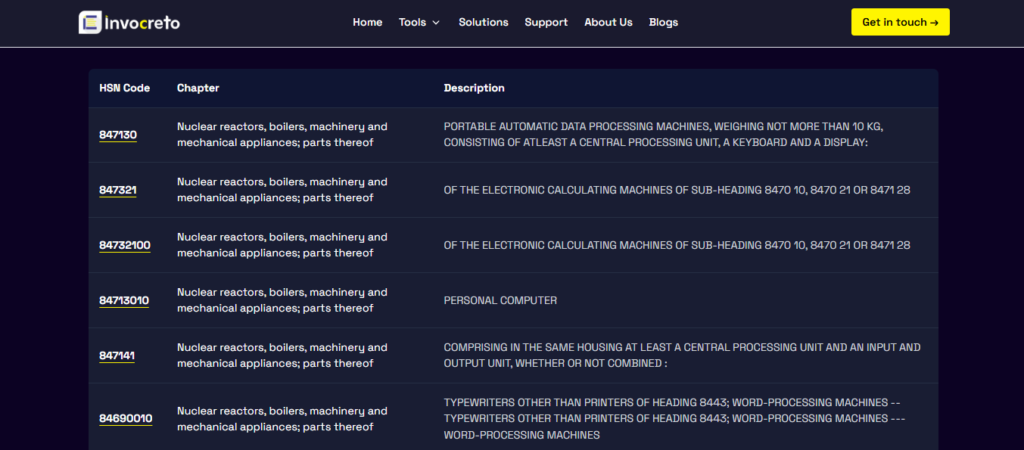
The easiest way to find a code is by entering the product or service name in the search bar. The tool then shows matching HSN or SAC codes along with descriptions so businesses can choose the most relevant one.
Example:
If you type “Laptop” or “Consulting Service”, the tool will display possible HSN or SAC codes related to those items.
3. Review the Description Before Selecting
Always check the description and category of the product or service before using a code, HSN codes follow a structured classification system where each level provides more detailed product identification.
Choosing the correct code based on the product’s material, purpose, or usage helps avoid GST mistakes.
Tips to Avoid GST Notices Related to HSN Codes
- Always maintain proper product or service classification to ensure the correct HSN or SAC code is used.
- Stay updated with GST rules and classification changes related to HSN codes.
- Before generating invoices, verify the HSN or SAC code to avoid tax calculation errors.
- Use a reliable HSN/SAC code search tool to confirm the correct classification before filing GST returns.
Conclusion
Businesses need to ensure they use the correct HSN and SAC codes to comply with GST rules. Using the correct code ensures the correct GST rate is applied, invoices are correct, and GST returns are filed without errors. Even small classification mistakes can cause tax records to mismatch and may get you in trouble with the GST department.
Businesses should always check the right HSN or SAC code before making invoices or filing GST returns to avoid these kinds of issues. Using reliable tools and carefully checking the details of products or services can help maintain accurate records and smooth GST compliance.
No comments yet